Context Compaction
Purpose
Shrink a long conversation before it overflows the model’s context window, keeping a working summary instead of losing the thread.
How it works
src/session/(agent-session + compact-modes) runs compaction atcompaction.thresholdPercent/thresholdTokensof the window, or manually via/compact.- Three modes (
src/session/compact-modes.ts):soft- summarize locally with the active model (skip remote endpoints).remote- summarize via the remote endpoint / provider-native compaction.snapcompact- archive history onto dense bitmap images the model reads back (no LLM call; rejects focus text).
/compact [mode] [focus...]- a leading known mode is treated as the mode selector, otherwise the whole argument string is focus instructions (backward compatible).compaction.strategyselects the summary strategy (e.g.context-full) unless a mode overrides it.
Configuration
compaction:
  enabled: true             # schema default: true
  strategy: ...             # summary strategy (context-full, ...)
  thresholdPercent: 80      # auto-compact when context hits 80%
  thresholdTokens: ...      # or when token count hits this
  remoteEnabled: ...        # allow provider-side compaction
  reserveTokens: 16384      # tokens to keep free during compaction
  keepRecentTokens: 20000   # most-recent tokens kept verbatim
  autoContinue: true        # continue the turn after compaction
  handoffSaveToDisk: ...    # persist pre-compaction history
Real example
> /compact                        # summarize locally, keep focus
> /compact soft focus on the TBM integration
> /compact remote                # provider-native compaction
> /compact snapcompact           # bitmap archive, no LLM call
Screenshot
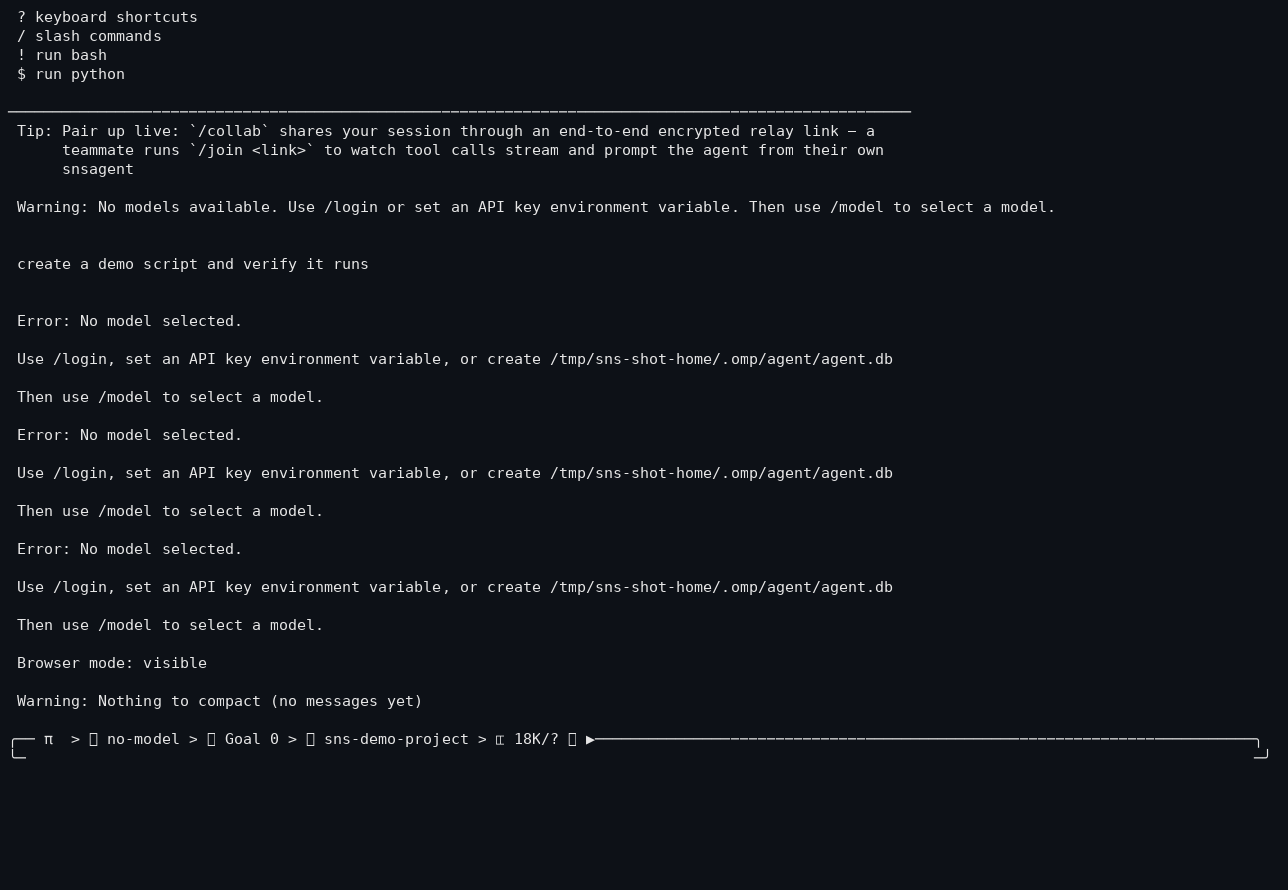
/compact on an empty session shows the empty-state message (“Nothing to compact”).
Failure behavior
- A mode that demands a remote path (
requiresRemote) with no remote endpoint set warns and falls back to a local summary. snapcompactwith focus text is an error (rejects focus).
Limitations
- Summaries lose detail by design;
keepRecentTokensprotects the tail. - Time/token measurement is not measured end-to-end with a real long session.